Case Study
Employment Hero App Redesign
Role:
Product Designer
Team:
Employment Hero
The Problem:
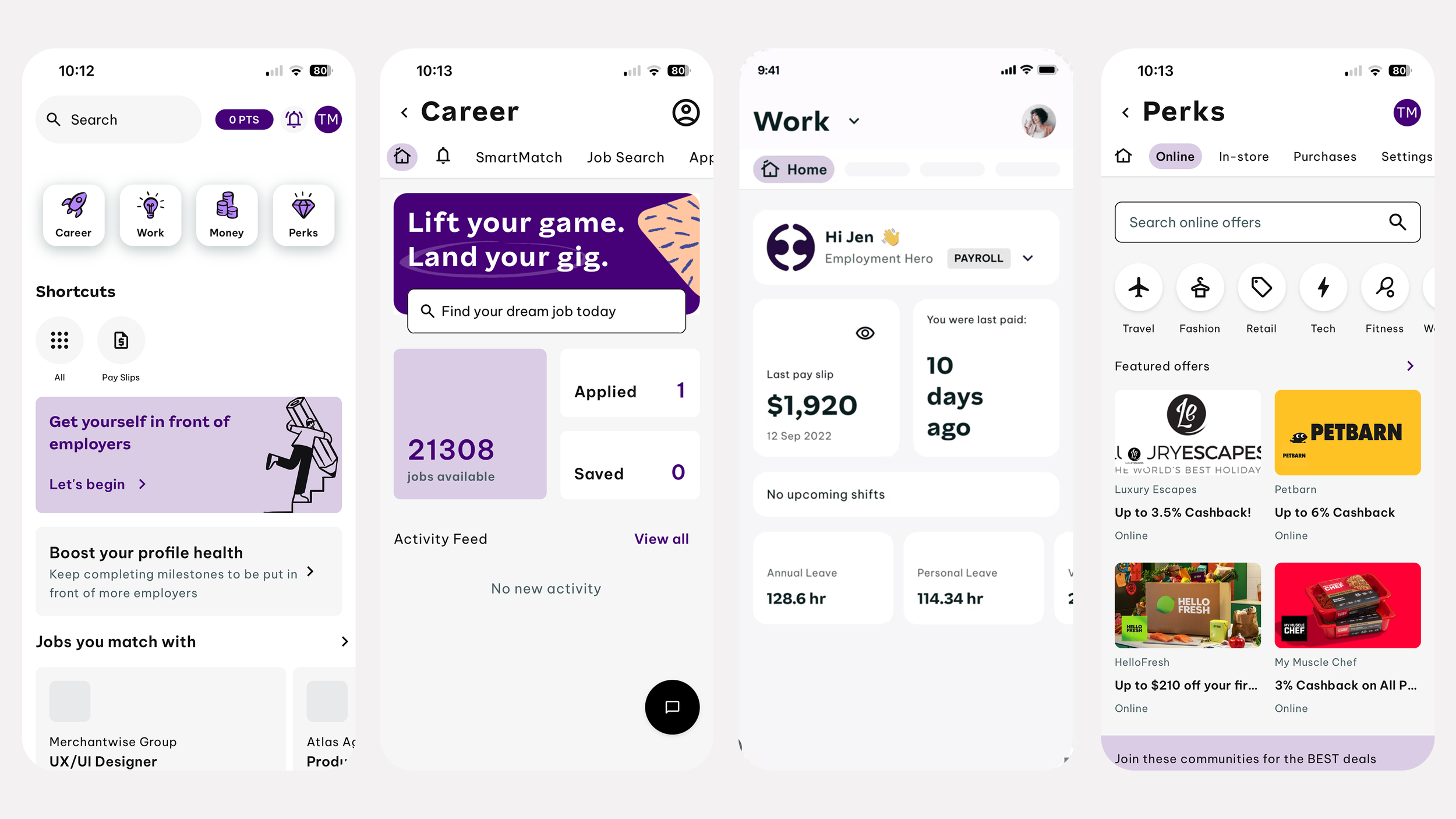
The Employment Hero Work app is used by thousands of employees and managers every day, but the experience was essentially identical for both. It never felt tailored to what you actually needed to do. On top of that, the app had grown into something of a super app over time, with so many features that users complained it took too many taps to get anywhere. Simple tasks felt unnecessarily complex. And visually, the UI was outdated and inconsistent, like it had been stitched together over the years rather than designed as a cohesive product.
The Process:
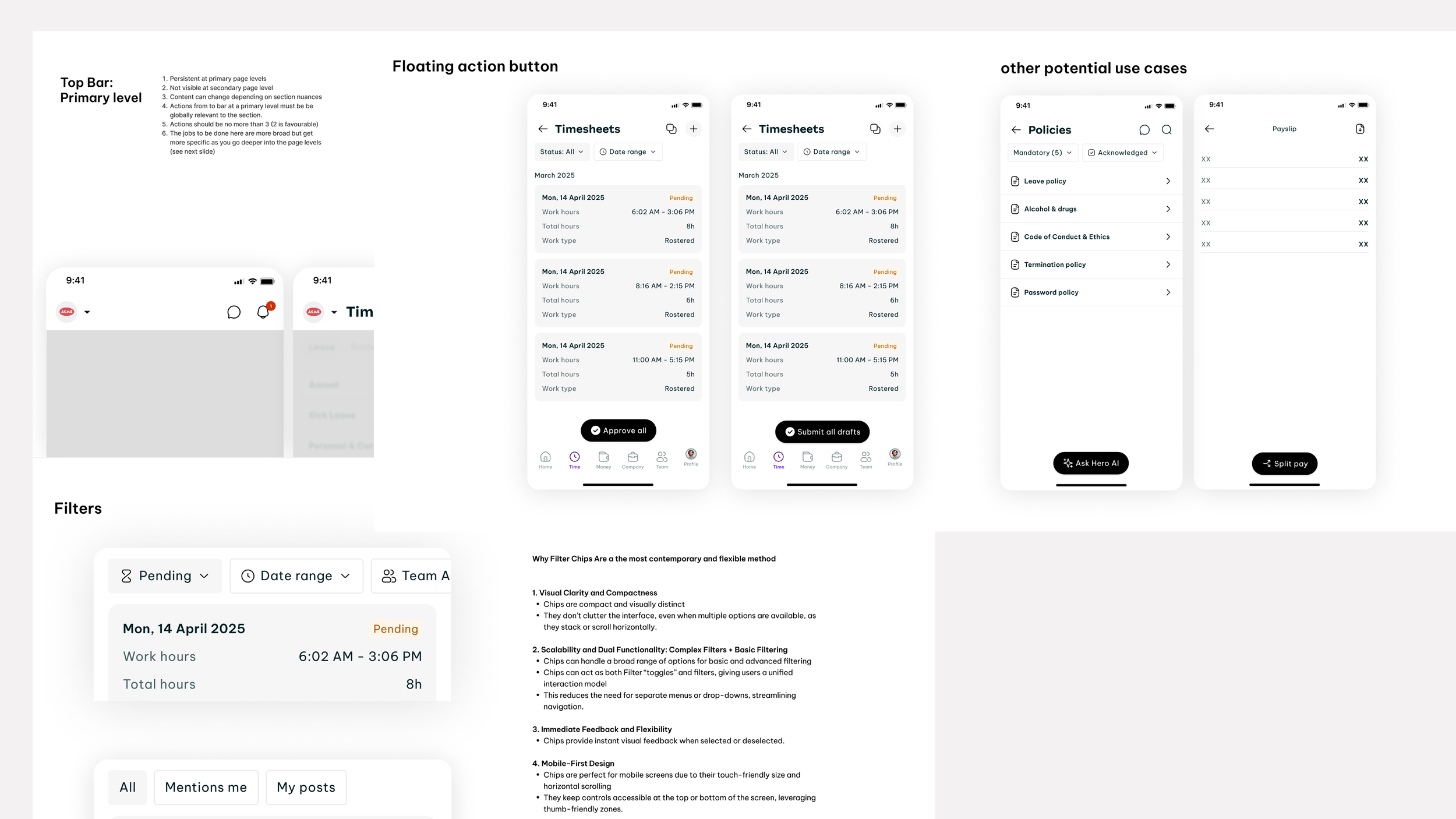
The goal was a full end-to-end redesign of the Work app, from foundational architecture through to the visual UI. We started with a thorough audit of the existing product to understand what users were actually doing most, mapping interactions into four core patterns: navigating, primary actions, filtering, and secondary actions. We also analysed competitor and reference products to ensure our decisions were grounded in familiar patterns.
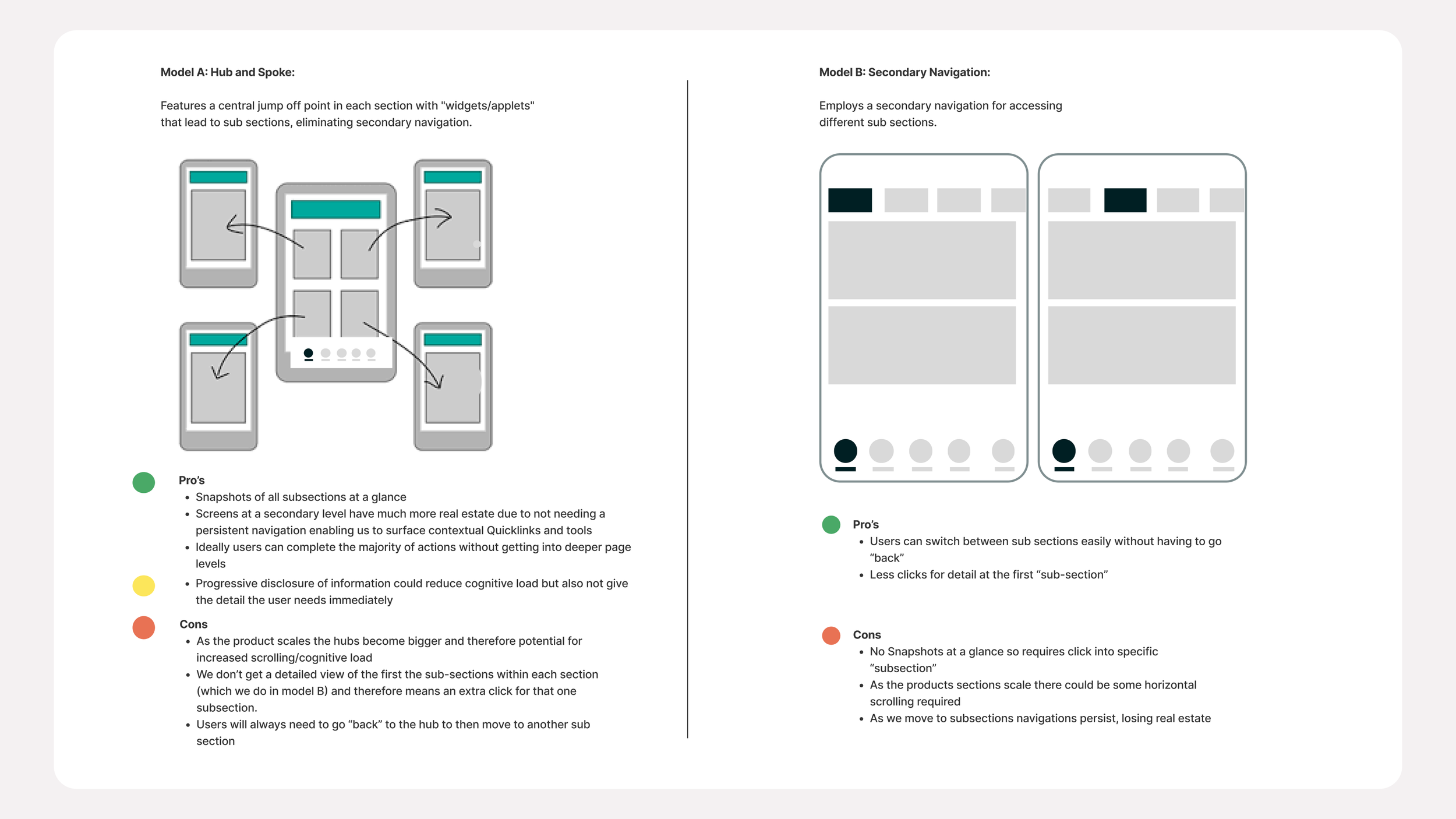
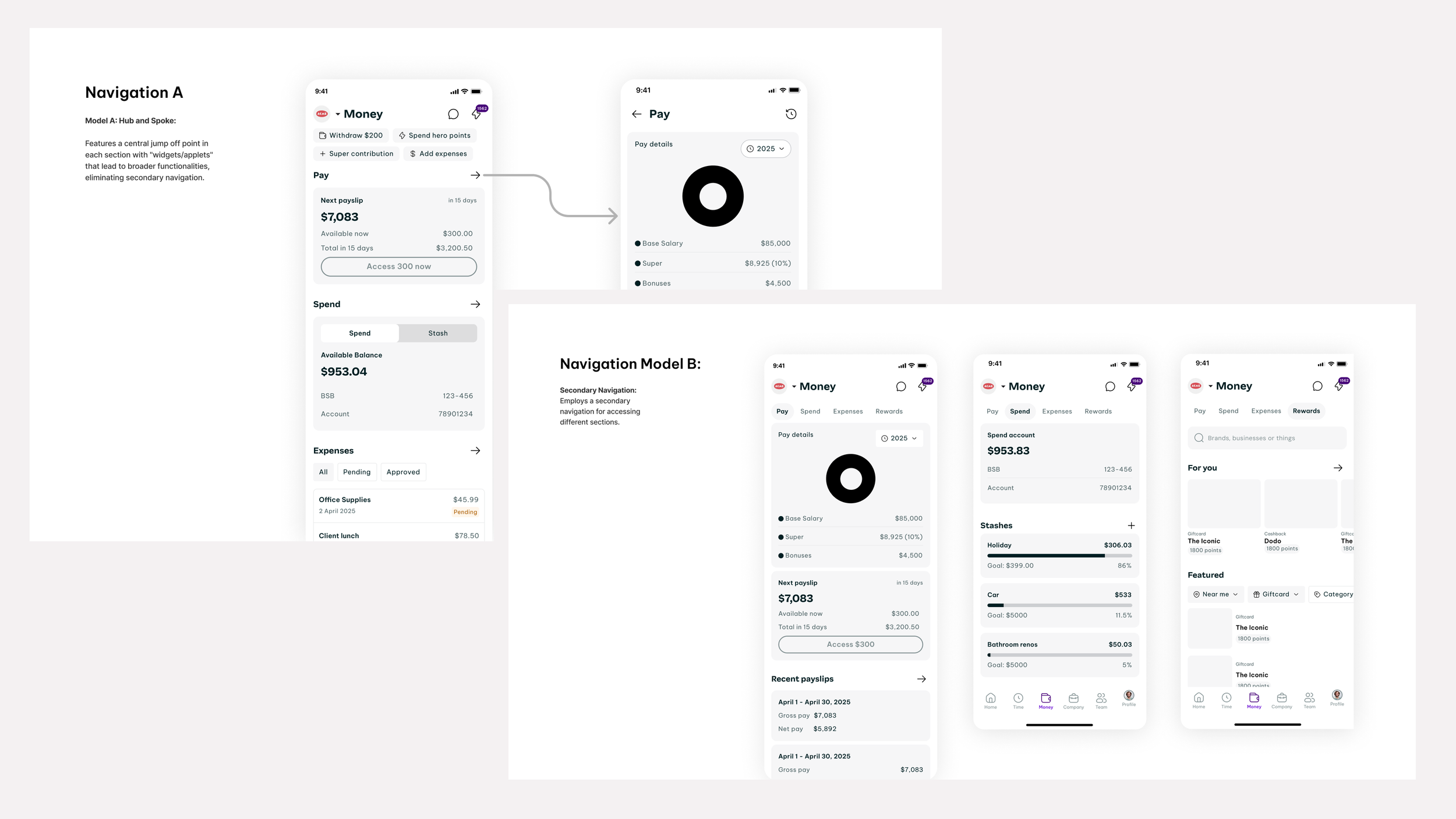
One of the biggest early decisions was navigation architecture. We explored two models, a hub and spoke model with a central jumping-off point, and a secondary navigation model. We moved forward with hub and spoke because users preferred getting a snapshot of everything at a glance before going deeper, and it meant completing most actions without needing to go further into the app.
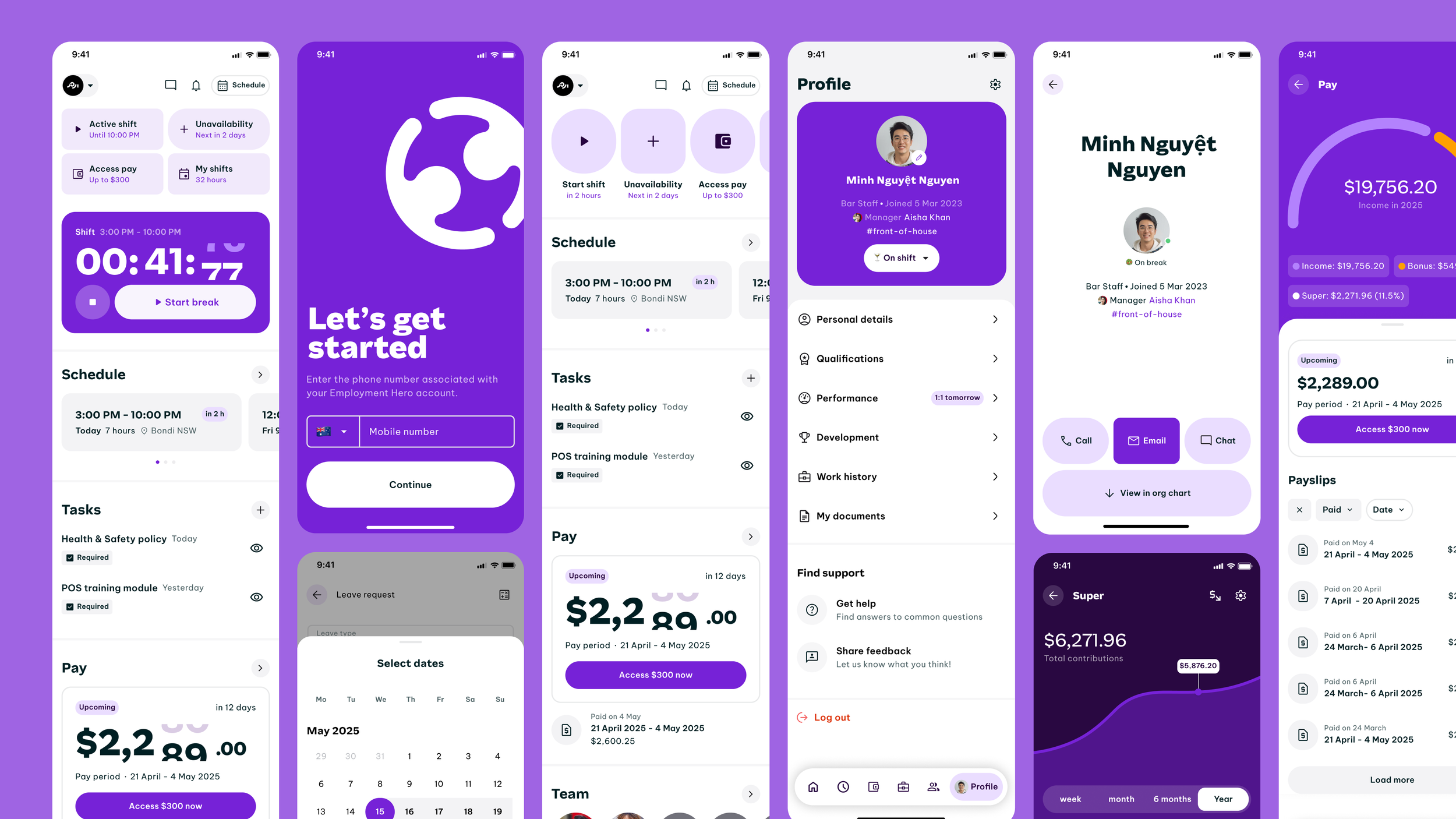
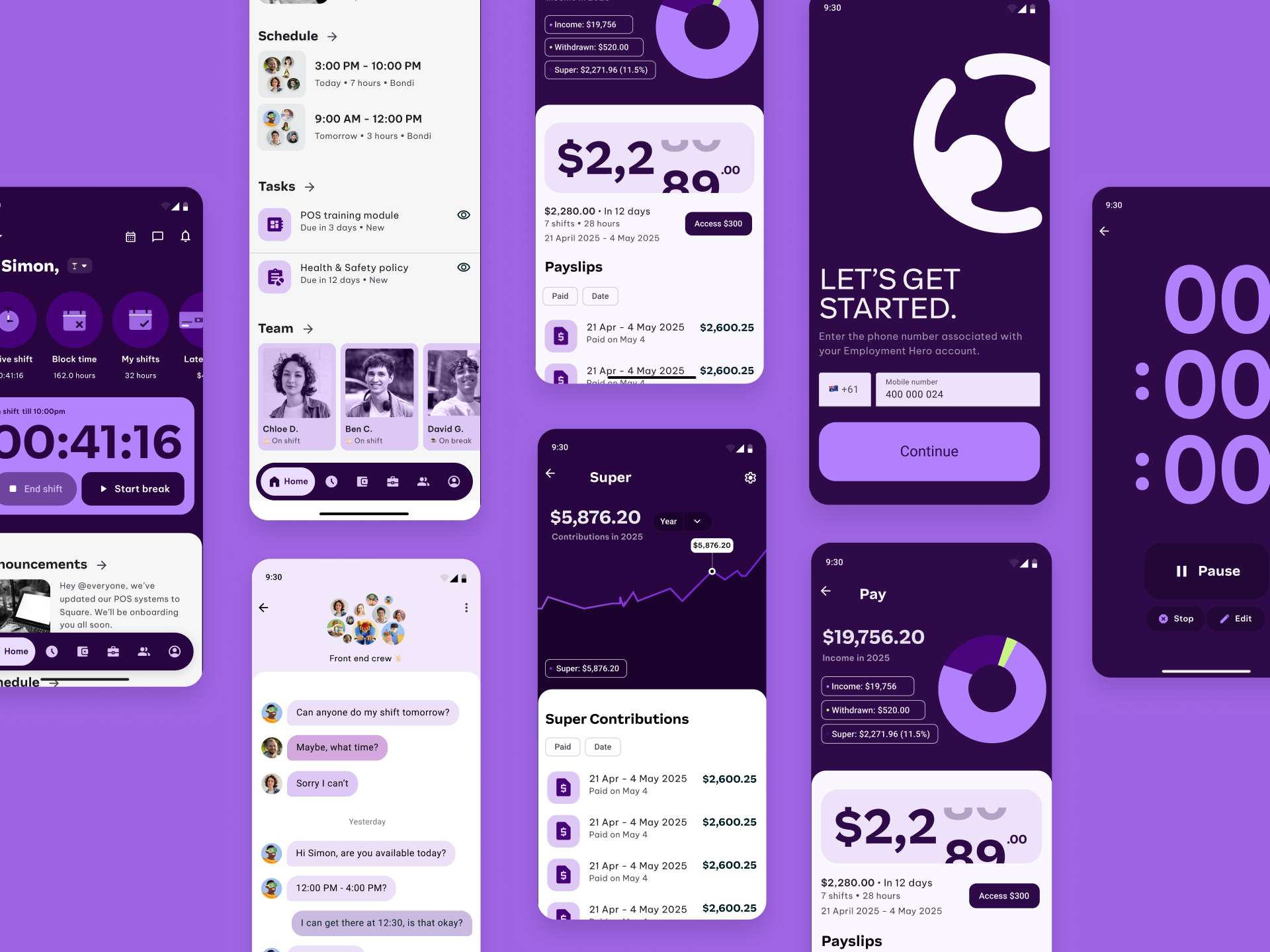
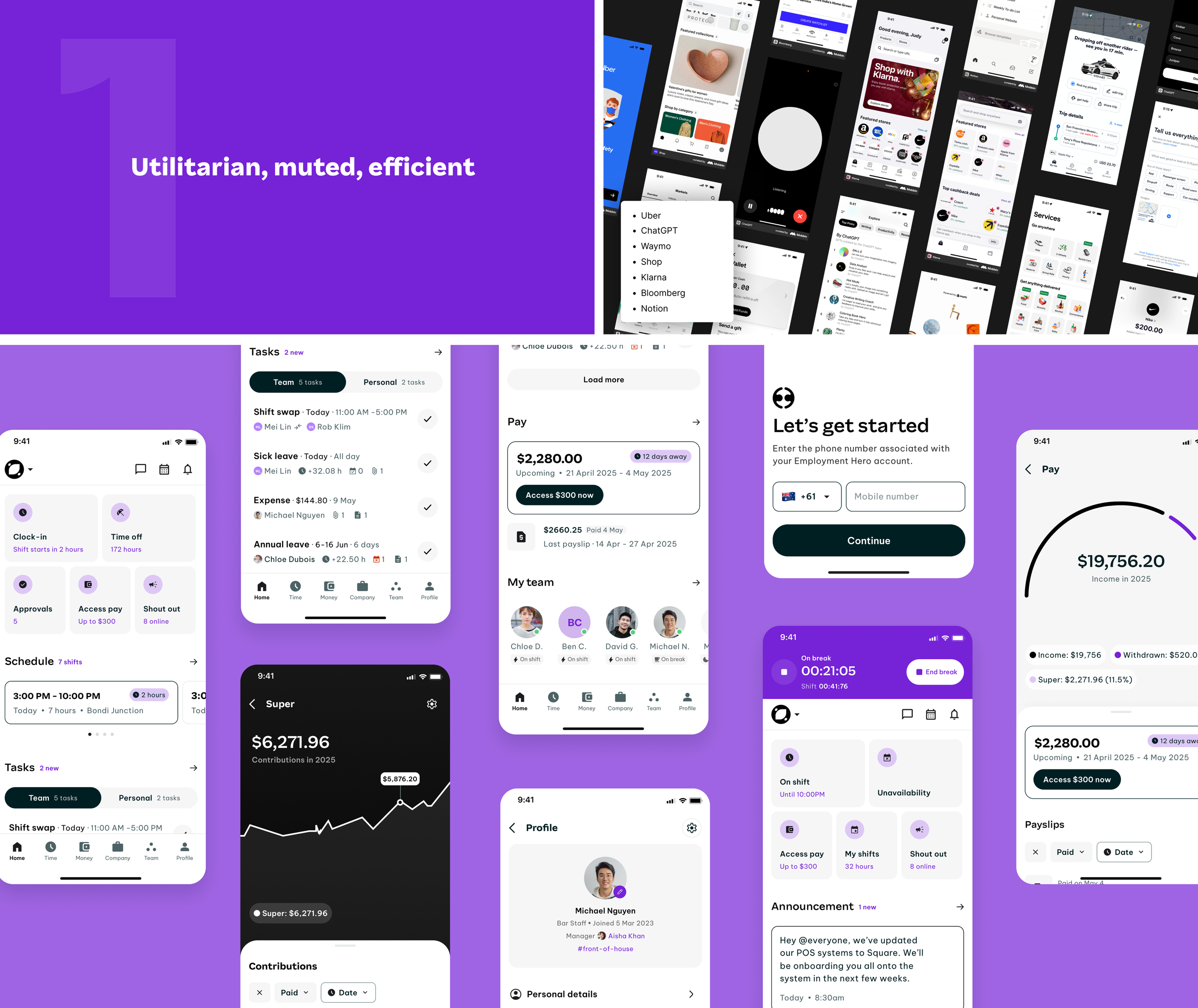
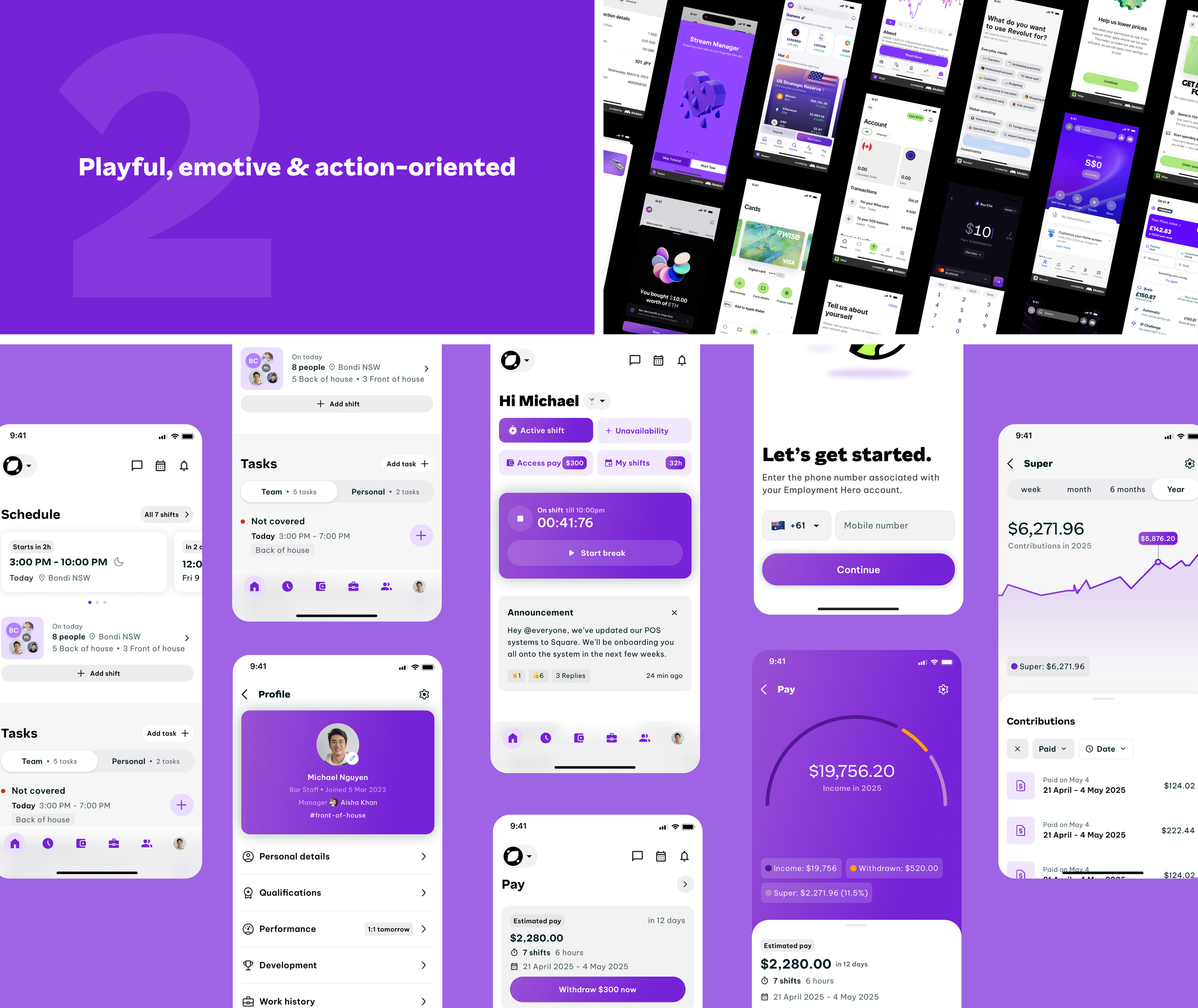
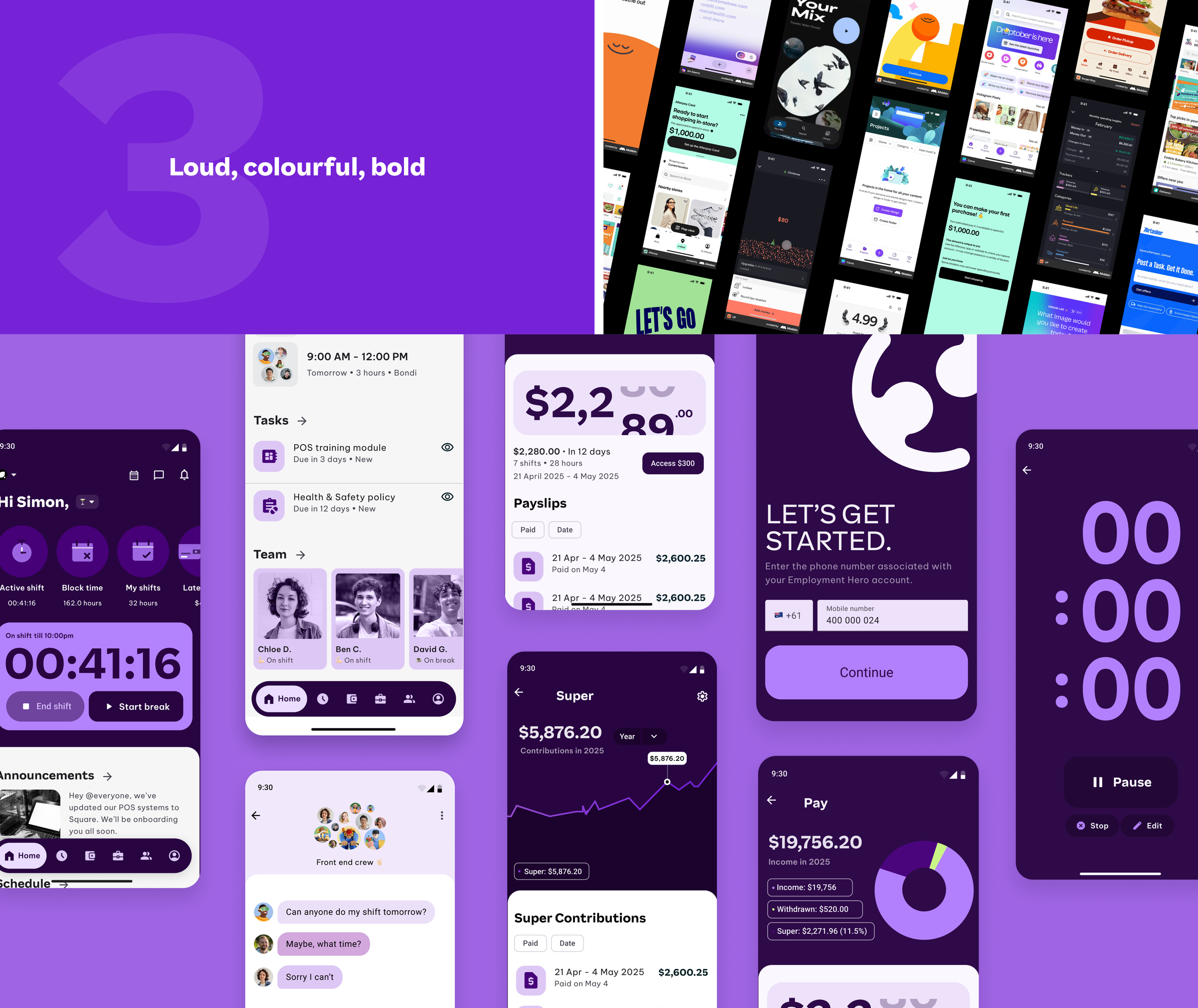
Once the architecture was locked in, we explored three visual directions to present to stakeholders. A utilitarian, muted approach focused on task completion; a bold, branded direction with saturated colours and elevation; and a louder, more expressive style with playful shapes and full-screen moments. The feedback was to combine them, use the expressive brand-forward moments where there's space for it, and lean into the cleaner utilitarian UI for the data-heavy sections of the app.
The Outcome:
The hybrid visual direction was approved and signed off by stakeholders. The foundational architecture and design system patterns were established and handed to engineering, with the redesign being rolled out in phases across the product.